How Do You Know When Truck Rotors Are Bad
Of all the regular maintenance items your car or truck requires, brakes are perhaps the most vital non-engine component. Especially now that so many cars come with automatic emergency braking. Many owners know to regularly inspect and modify their restriction pads. However, information technology's as well important to pay attention to your brake rotors. After all, the best pads in the world are useless without a rotor to grip. But are your brake rotors due for replacement?
Signs your restriction rotor needs to be replaced
Practise you lot feel a pulse when you step on the brake pedal, near like the ABS is boot in? That'southward a sign your brake rotors may be warped, co-ordinate to NADA Guides, and should be replaced. It Nonetheless Runs explains that the pulse comes from the rotor unevenly hitting the brake pads. This causes vibrations to spread through the brake fluid, which spreads into the brake pedal. Dominicus Devil Auto explains that restriction rotors normally warp due to excessive heat.
But, while this vibration is maybe the clearest sign, there are other symptoms. These pulses tin can also spread into the suspension and ultimately into the steering wheel. In addition, although restriction pads can and exercise fail in extreme conditions, premature failure can indicate warped rotors. Too, although some restriction squeal is normal, specially if you lot fit full-metal brake pads, excessive noise tin can besides indicate brake rotor bug.
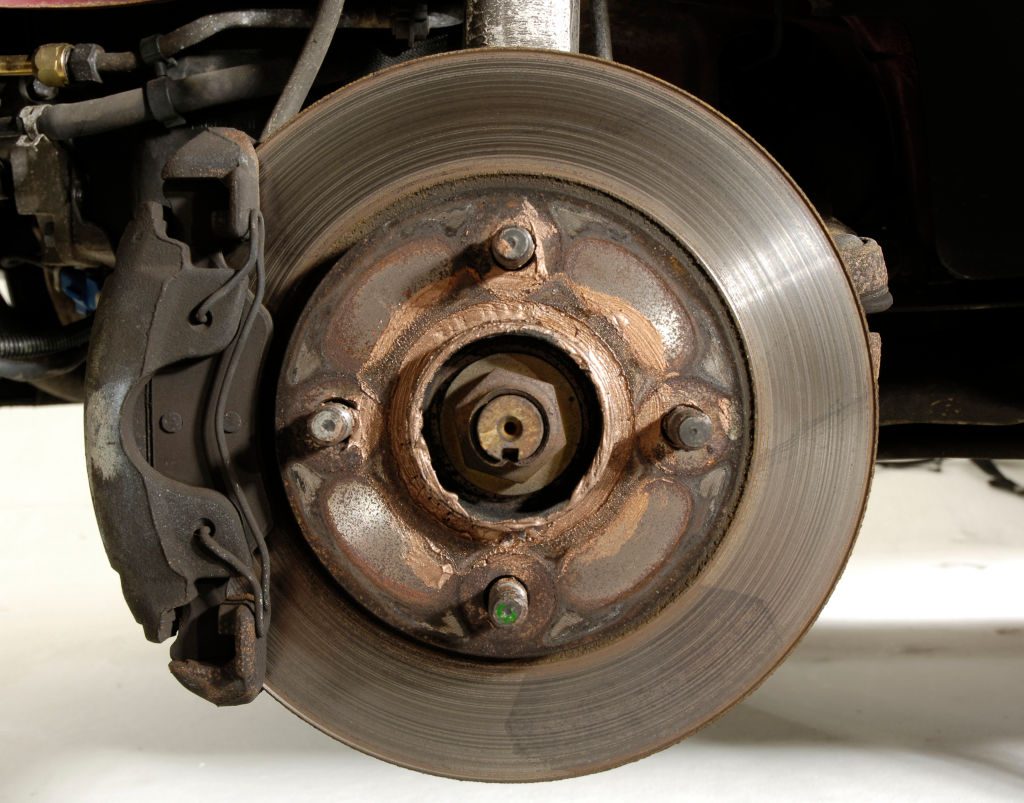
There's also one other way to cheque if your brake rotors need to be replaced, according to Information technology Nevertheless Runs and Autoblog. That'southward to take the wheel off and get a adept look at information technology, preferably with a ruler nearby. As Your Mechanic and Car and Commuter explain, brake rotors are somewhen worn away over time. Once they go besides thin, information technology'south time for a replacement. Simply, if the rotors have severe scratching and scarring, or in that location'due south a noticeably raised outer-lip on the rotors, that'southward a symptom of warping.
However, sometimes you lot do want marks on your brake rotors.
Restriction rotor marks from bedding in brake pads
Scratches and marks on the rotor are inevitable; it comes from pad meeting rotor. And, as r/MechanicalAdvice sub-Reddit user u/OfficialSpiderPig discovered recently, not all rotor marks are warning signs.
u/OfficialSpiderPig asked the sub-Reddit about some black marks on their motorbike's brake rotors. The user had just installed new restriction pads and was worried something had gone incorrect. However, other r/MechanicalAdvice users bodacious u/OfficialSpiderPig that this was merely a sign that the wheel'southward brakes were bedding in.
As Brake Performance and Tire Rack explain, when you lot fit new brake pads and rotors, you need to bed the pads in properly. This involves repeated high-speed stops, followed by a cooling-off period, to coat the rotors with a layer of pad cloth. This, Kal Tire explains, provides a smoother braking surface, removes impurities from the pad surface, and actually helps foreclose excessive rotor scarring. And it usually manifests as black marks, like the ones u/OfficialSpiderPig saw.
Bedding in is required by every pad and rotor manufacturer, from high-end to low-finish. Although, when it comes time to fit new rotors, do you need to go tiptop-shelf to get the all-time performance?
Do you need the most ones?
Often, restriction rotor upgrade kits feature rotors 'pre-marked', so to speak, with drilled holes, slots, and/or vents. Equally Engineering Explained's Jason Fenske explained, each has a specific function. Vents motility heat abroad, slots vent debris and give pads a better braking surface, and holes forestall stress failures in racing. Only does buying more expensive restriction rotors actually help yous stop faster? Non necessarily.
Donut Media upgraded two Nissan 350Zs with different braking kits: one got a $450 kit, the other a $four,500 kit. The latter did have a larger rotor, with college-performance brake pads. However, over repeated 60-0 restriction tests, both kits only cut a few feet from the stock car's braking distance. The biggest difference between the brake kits was in resisting fade from heat buildup. Even afterward they started smoking, the $4500 brakes were consistent. The $450 brakes, though, non merely got worse, they actually defenseless burn down.
Then, if you need to replace your warped rotors, going expensive probably won't give you the result you desire.
Follow more updates from MotorBiscuit on our Facebook page.
gonzalesyoughoor1972.blogspot.com
Source: https://www.motorbiscuit.com/are-the-marks-on-your-brake-rotors-a-bad-sign/
0 Response to "How Do You Know When Truck Rotors Are Bad"
Post a Comment